
Comparing data jobs can feel overwhelming when titles like Data Scientist, Data Analyst, Business Analyst, BI Analyst, and Data Engineer all sound like they do roughly the same thing. They don’t. Over the last several years, I’ve explored many corners of the technology world, networking, cybersecurity, and data, before landing on a data role that fit my transferable skills, problem-solving instincts, and appetite for analytics. This guide breaks down exactly what each role does, where they overlap, what they pay, and which one might actually fit you.
If you’re exploring a career in data or trying to hire the right professional for your team, this guide, Comparing Data Jobs, will help you understand what each role does, how they overlap, and who might thrive in each position. I’ll also break down salary ranges across experience levels and share a handy chart to make comparisons easy.
So grab a cup of coffee, and let’s dive into the fascinating world of data jobs!
Comparing Data Jobs: What Does Each Role Actually Do?
Data Scientists: The Innovators
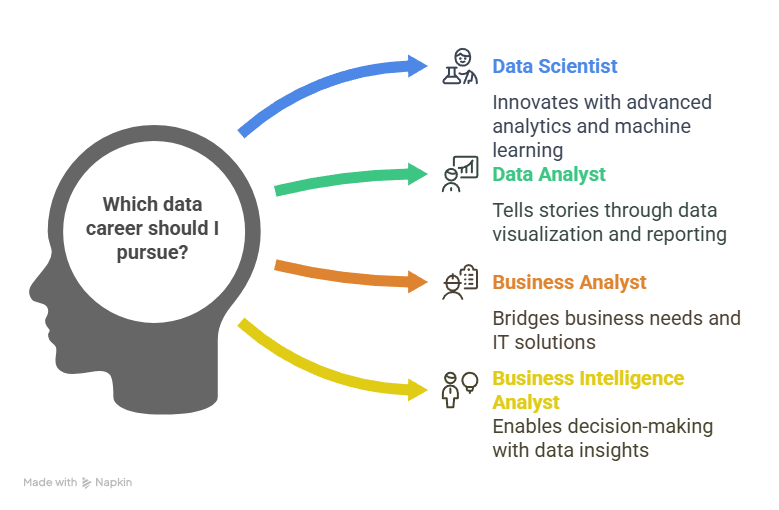
Data scientists are the creative problem-solvers of the data world. They use advanced statistical techniques, machine learning, and programming to uncover patterns hidden deep within data. Think of them as detectives solving mysteries to help businesses make smarter decisions.
For example, a data scientist might build a predictive model to forecast customer behavior or design an algorithm that optimizes delivery routes for a logistics company. They often work with programming languages like Python or R and tools like TensorFlow for machine learning.
If you enjoy tackling complex problems and love working with cutting-edge technology, this role might be perfect for you.
👉 Learn more about what it takes to become a Data Scientist.
Data Analysts: The Storytellers
Data analysts focus on turning raw data into actionable insights. While they may not dive into advanced algorithms like data scientists, they play a crucial role in helping organizations understand their performance and make informed decisions.
For instance, a data analyst might identify sales trends to help an e-commerce company optimize its product offerings or create dashboards showing customer demographics for marketing teams. Tools like Excel, SQL databases, Tableau, and Power BI are their bread and butter.
If you’re someone who loves working with numbers but also enjoys explaining your findings in a way that others can easily understand, this role could be ideal.
👉 Discover more about being a Data Analyst.
Business Analysts: The Bridge Builders
Business analysts are all about connecting the dots between business needs and technical solutions. They focus on improving processes and systems to help organizations run more efficiently.
A business analyst might work on streamlining operations by identifying bottlenecks or recommending new software solutions. They often collaborate with stakeholders across departments to gather requirements and ensure solutions align with business goals.
This could be your calling if you’re great at listening to people’s needs and translating them into actionable plans while enjoying teamwork.
👉 Learn more about what it means to be a Business Analyst.
Business Intelligence Analysts: The Decision Enablers
BI analysts specialize in creating tools that help businesses track performance metrics and make decisions based on real-time data. They’re the experts behind dashboards, reports, and systems that turn raw numbers into knowledge.
For example, a BI analyst might design dashboards that show daily sales trends by region or create reports that highlight customer satisfaction metrics over time. They rely on tools like Tableau or Power BI to visualize their findings.
This could be your dream job if you’re detail-oriented and enjoy creating visuals that help others make informed decisions quickly.
👉 Explore more about being a Business Intelligence Analyst.
Data Engineers: The Builders
Data engineers are the backbone of the data world; they build the infrastructure that allows all other roles to function effectively. Their job is to design systems for efficiently collecting, storing, transforming, and managing data.
For instance, they might develop pipelines to pull customer transaction data from multiple sources into a centralized database, or optimize storage solutions using cloud platforms such as AWS or Azure.
If you enjoy building systems from scratch and solving behind-the-scenes technical challenges, this role could be perfect for you.
👉 Learn how to become a Data Engineer.
How Are These Roles Similar and Different?
Similarities
All these roles share some common ground:
They involve working with data to solve problems.
Communication skills are key—whether you’re explaining findings or collaborating with teams.
Each role contributes to better decision-making within an organization.
Differences
Here’s where they diverge:
Technical Depth: Data Scientists and Data Engineers require advanced programming skills; Business Analysts focus more on processes.
Focus: Data Analysts interpret structured datasets; BI Analysts specialize in reporting tools; Data Engineers build infrastructure.
Complexity: Data Scientists tackle cutting-edge problems using machine learning; other roles may focus on established methods.
Overlaps
There’s plenty of collaboration:
BI Analysts often share tools with Data Analysts.
Business Analysts may overlap with project managers or BI teams.
Data Engineers work closely with Data Scientists when deploying models.
Comparing Data Jobs Salary Across Roles
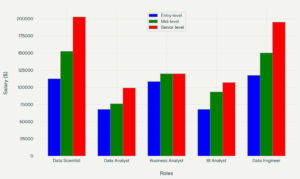
Here’s where things get exciting! Salaries vary by experience level (entry-level vs. senior-level) and by location and industry. To make comparisons easier, here’s an updated chart:
Salary Comparison Across Data Roles (2025)
| Role | Entry-Level ($) | Mid-Level ($) | Senior-Level ($) |
|---|---|---|---|
| Data Scientist | $95K–$130K | $130K–$175K | $175K–$230K |
| Data Analyst | $68K–$76K | $76K–$99K | $99K–$120K |
| Business Analyst | $70K–$90K | $90K–$115K | $115K–$140K |
| BI Analyst | $68K–$80K | $80K–$100K | $100K–$120K |
| Data Engineer | $105K–$130K | $130K–$170K | $170K–$220K |
And here’s a visual representation for quick comparison:
Finding Your Fit: Personality Traits
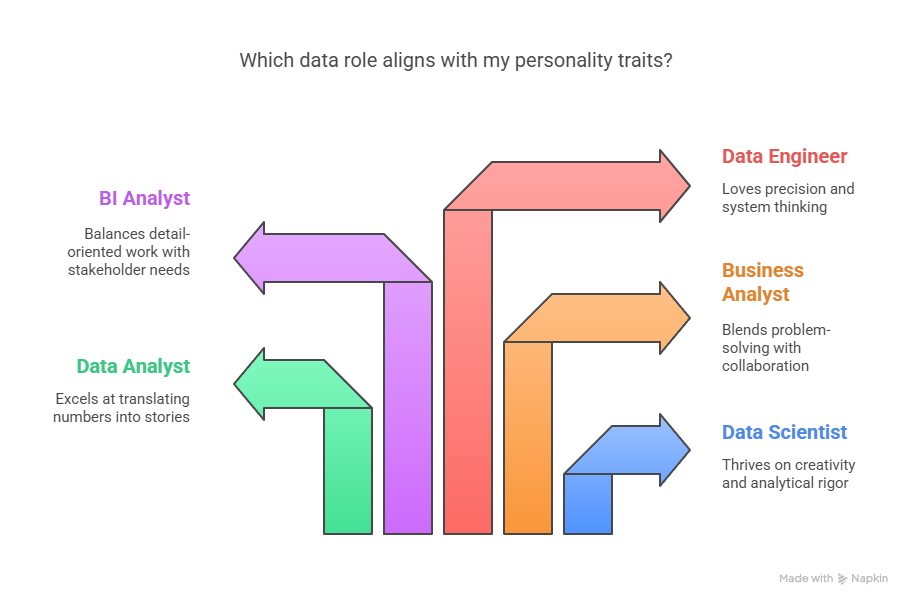
Choosing the right career isn’t just about skills—it’s also about personality fit:
Data Scientists thrive on creativity paired with analytical rigor.
Data Analysts excel at translating numbers into stories.
Business Analysts blend problem-solving with collaboration.
BI Analysts balance detail-oriented work with stakeholder needs.
Data Engineers love precision and system thinking.
Wrapping Up: Which of These Data Jobs Is Right for You?
When comparing data jobs, the most important factor isn’t salary, it’s fit. The world of data careers is vast and full of opportunities! Whether you’re drawn to solving complex problems as a Data Scientist, building reliable systems as a Data Engineer, or crafting compelling stories through dashboards as a BI Analyst, there’s a role for everyone in this exciting field.
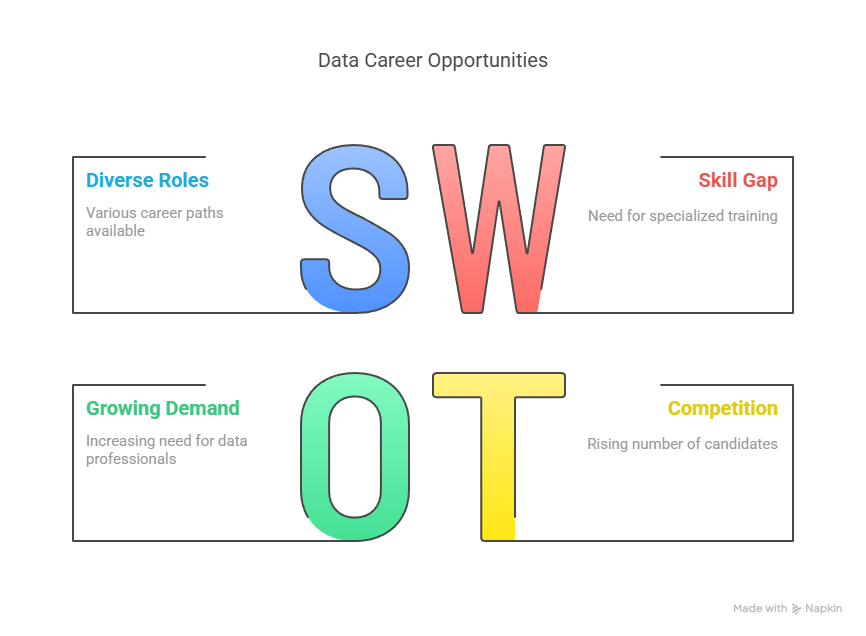
The data industry offers diverse roles and growing demand, making it an excellent time to explore these career paths. However, when comparing data jobs, it’s essential to be mindful of challenges like the skill gap, emphasizing the need for specialized training and competition as more candidates enter this thriving field.
By understanding your strengths, interests, and transferable skills, you can position yourself to thrive in this growing industry. So take stock of where you shine—and start your journey toward making an impact in the ever-evolving world of data!